Bank Mandiri Indonesia Review: Accounts, Digital Features and Who Should Bank Here
Mandiri Bank Indonesia review: explore accounts, digital banking features, fees and who benefits most from banking with one of Indonesia's largest state banks.

If you've spent any time navigating Indonesia's banking landscape, you've almost certainly encountered Bank Mandiri. Its ATMs are seemingly everywhere — from the arrivals hall at Soekarno-Hatta to the smallest provincial towns — and its name carries a weight that comes from being one of the country's largest state-owned banks. But size alone doesn't make a bank worth your time. After looking closely at what Mandiri actually offers everyday customers, I want to share what stands out, what falls short, and who I think genuinely benefits from banking here.
A Quick Background on Bank Mandiri
Bank Mandiri was formed in the late 1990s through the merger of four state-owned banks during Indonesia's financial restructuring period. Today it operates under the oversight of the Otoritas Jasa Keuangan (OJK), Indonesia's financial services authority, and remains majority-owned by the Indonesian government. That government backing gives Mandiri a stability profile that many privately-owned competitors simply cannot match — deposits are also covered under the national deposit guarantee scheme administered by the Lembaga Penjamin Simpanan (LPS), up to the regulated maximum per customer.
For anyone nervous about where to park their savings in a market with dozens of competing institutions, that combination of state ownership and deposit insurance is genuinely reassuring.
The Account Range: What Mandiri Offers Day-to-Day Customers
Tabungan Rupiah (Standard Savings Account)
Mandiri's core savings account — the Tabungan Rupiah — is where most individual customers start. It comes with a Mandiri Debit card that works on the ATM Bersama, Prima, and VISA networks, which means broad acceptance both locally and when travelling. The account requires a minimum initial deposit, though this is modest compared to premium accounts at some private banks. Monthly admin fees apply, and like most Indonesian banks, Mandiri deducts these automatically from your balance, so it's worth maintaining a buffer above the minimum threshold.
Interest rates on standard savings accounts here follow the general market trend — they are modest, and if maximising returns on idle cash is your priority, you'll want to look at time deposits rather than a basic tabungan. That said, for daily transaction needs, the convenience of Mandiri's network makes this account hard to beat.
Tabungan Rencana (Goal-Based Savings)
This is one of Mandiri's more interesting products for disciplined savers. Tabungan Rencana is essentially a systematic savings plan where you commit to a fixed monthly deposit over a chosen tenure. The account locks in a slightly better interest rate than the standard tabungan, and Mandiri bundles in a free life insurance component — a relatively rare touch at this level of product. It suits people saving towards a specific goal, whether that's a down payment on a property, a child's education fund, or a planned business investment.
Deposito (Time Deposits)
If you have a lump sum to set aside for a defined period, Mandiri's time deposit product offers tenures ranging from one month to twenty-four months. Rates vary depending on the tenure and the amount deposited, and Mandiri does periodically run promotional rates for larger placements. Always check the current rate schedule directly with the bank, as these shift with broader monetary policy set by Bank Indonesia — you can follow rate developments through the Bank Indonesia official website.
Digital Banking: Livin' by Mandiri
The most significant transformation Mandiri has gone through in recent years is on the digital front. Its mobile banking app, rebranded as Livin' by Mandiri, replaced the older Mandiri Online platform and has genuinely impressed users who remember the clunkier predecessor.
Livin' handles most of what everyday customers need: fund transfers to other Mandiri accounts and inter-bank transfers via BI-FAST, bill payments (electricity, water, internet, phone top-ups), virtual account payments for e-commerce, and even investment products like mutual funds through Mandiri Investasi. The interface is cleaner than many competitors, and the app has received consistently strong ratings on both Android and iOS platforms.
One feature that genuinely stands out is the integration with QRIS — Indonesia's unified QR payment standard. Through Livin', you can pay at any merchant displaying a QRIS code, which now covers an enormous range of retailers, warungs, food stalls, and service providers across the country. This brings Mandiri customers into the same seamless payment ecosystem that digital-native wallets offer, without needing a separate e-wallet app.
Kopra by Mandiri: The Business-Focused Platform
For business owners and corporate clients, Mandiri runs a separate digital platform called Kopra. It handles payroll disbursement, bulk payments, cash management, and trade finance functions. If you're running even a medium-sized business in Indonesia, having access to Kopra alongside your personal Livin' account creates a fairly complete banking ecosystem under one institution.
Credit Cards and Lending Products
Mandiri's credit card lineup covers entry-level, mid-tier, and premium segments. The cards operate on the Visa and Mastercard networks, and many come with cashback, rewards points, or co-branded benefits tied to airline miles programs. Annual fees and interest rates vary by card tier — always review the full fee schedule on Mandiri's website or at a branch before applying, as promotional annual fee waivers sometimes apply for the first year.
For personal loans, Mandiri offers Kredit Tanpa Agunan (KTA) — unsecured personal loans — as well as home loans (KPR) and vehicle financing. Existing Mandiri savings customers sometimes find the application process smoother, since the bank already holds transaction history that supports credit assessment.
If you're comparing credit card options across the region, it's worth seeing how Indonesian bank card programs stack up — our review of BCA Credit Cards gives a useful parallel look at what Indonesia's largest private bank offers in the same space.
Branch and ATM Network
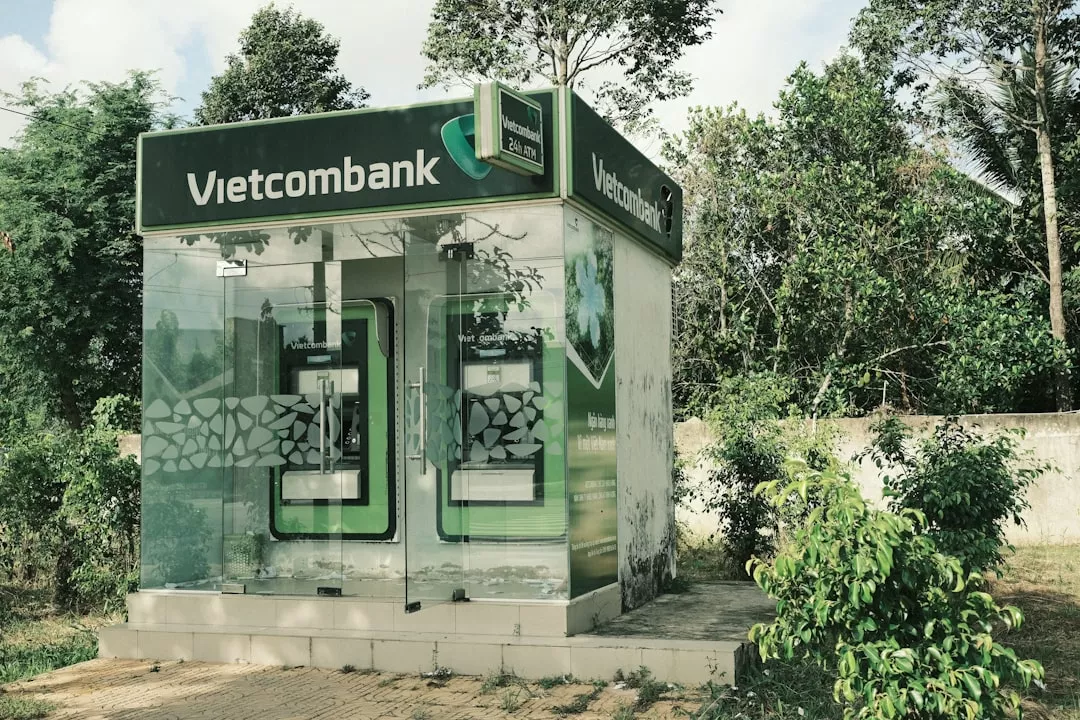
This is arguably where Mandiri's advantage is most concrete. The bank operates one of the widest branch and ATM networks in Indonesia, spanning Java, Sumatra, Kalimantan, Sulawesi, and the eastern islands. For customers who live or work outside major cities — or who frequently travel between them — that physical reach is something digital-only banks cannot replicate.
Inter-bank ATM withdrawals incur a fee, as they do across the Indonesian banking system, but Mandiri-to-Mandiri transactions are generally free. BI-FAST transfers via Livin' have also dramatically reduced the cost of sending money to accounts at other banks, with fees significantly lower than the older SKN and RTGS systems.
Who Actually Benefits Most from Banking with Mandiri?
After going through the full picture, a few customer profiles stand out as the clearest fits for Mandiri.
Salaried employees at larger Indonesian companies often find themselves with a Mandiri payroll account by default — many corporations and government agencies use Mandiri for salary disbursement. If that's your situation, leaning into Mandiri's full product range (time deposits, investment funds, credit cards) rather than treating it as a pure payroll account makes good financial sense.
Frequent domestic travellers benefit enormously from the branch and ATM density. Knowing you can find a Mandiri ATM in Makassar, Manado, or Medan with minimal searching removes a genuine pain point.
Small and medium business owners who need a bank with both retail and business banking capability in one place will find Mandiri's dual offering — Livin' for personal, Kopra for business — a practical solution that avoids splitting operations across institutions.
On the other hand, if you are primarily chasing the highest savings interest rates or the most innovative digital-only features, some of the newer digital banks operating in Indonesia may edge out Mandiri on those specific dimensions. Similarly, customers who want a highly personalised premium banking relationship might find that private banks with smaller client bases offer more attentive service.
For context on how a neighbouring country's major state-linked bank compares in its own market, our BCA Bank Indonesia review covers the private-sector alternative that many Indonesians consider alongside Mandiri.

A Few Practical Tips Before You Open an Account
If you're ready to open a Mandiri account, bring your KTP (national identity card) and NPWP (tax identification number) — both are typically required for standard account opening. The process can be done at a branch, and Mandiri has also been expanding its digital account opening capability through the Livin' app, which saves a trip for straightforward personal accounts.
Pay attention to the minimum balance requirements on whichever account you choose. Falling below the threshold triggers an admin charge that quietly chips away at small balances. Setting up a small automatic top-up from another account can prevent this from becoming a nuisance.
Finally, activate Livin' as soon as your account is open. The app's functionality now covers the vast majority of everyday banking needs, and it's significantly faster than queuing at a branch or calling the contact centre for routine transactions.
Final Thoughts
Bank Mandiri isn't trying to be the flashiest name in Indonesian banking, and it doesn't need to be. What it offers is something more durable: scale, reliability, regulatory standing, and a digital platform that has genuinely caught up with modern expectations. For most Indonesians navigating everyday financial life — saving, transacting, borrowing, and occasionally investing — Mandiri covers the bases well. The key is knowing which of its products actually suit your situation, rather than defaulting to whatever the branch teller suggests first.

James Mitchell
Financial journalist covering Australian and New Zealand banking.