Vietcombank Bank Review: Accounts, Digital Features and Who Should Bank Here
A practical review of Vietcombank Vietnam — savings accounts, digital banking, fees and who benefits most from banking with the country's top state bank.
If you ask almost anyone in Vietnam which bank they think of first, Vietcombank comes up more often than not. It is the country's largest commercial bank by market capitalisation, has one of the widest ATM networks, and carries a reputation built over decades of being state-backed and operationally stable. But being big does not automatically mean being the best fit for everyone. Having spent time looking closely at what Vietcombank actually offers day-to-day customers, I want to give you an honest picture of its accounts, digital tools, fees, and the kind of person who genuinely benefits from banking here.

Background and Regulatory Standing
Vietcombank — formally the Joint Stock Commercial Bank for Foreign Trade of Vietnam — was originally established as the country's foreign trade specialist. Today it serves millions of retail and corporate customers across Vietnam. The bank operates under the supervision of the State Bank of Vietnam (SBV), the country's central bank and primary financial regulator. Its partial state ownership gives it a layer of implicit stability that purely private banks do not carry in the same way, which matters to customers who prioritise security of deposits above all else.
Account Types Worth Knowing About
Demand Deposit Accounts
Vietcombank's standard current account — locally known as a demand deposit account — is available in both Vietnamese Dong (₫) and major foreign currencies including USD and EUR. For most everyday users, the ₫-denominated account is what you will open first. It comes with a linked debit card, access to Vietcombank's ATM network, and basic online banking features. Minimum balance requirements and monthly fees vary depending on the account tier you choose, so it is worth checking directly with the bank for the most current schedule before committing.
Savings Accounts and Term Deposits
Where Vietcombank earns strong marks from Vietnamese savers is its term deposit (tiền gửi có kỳ hạn) product range. Deposit terms typically range from one month up to 36 months, and interest rates vary based on the term length and the amount deposited. Because the SBV sets a ceiling on deposit interest rates for short terms, rates tend to move in a band across most major banks. Vietcombank's rates are generally competitive with Techcombank and VPBank for standard terms, though smaller private banks sometimes offer higher promotional rates to attract new depositors. If you prioritise a well-known, state-linked institution over chasing the absolute highest rate, Vietcombank is a sensible choice for term deposits.
For savers still exploring their options across the Vietnamese banking landscape, the approach Vietcombank takes to deposit safety is comparable to how established banks in other markets structure their offerings — you can read more about that philosophy in our guide to BPI Bank in the Philippines, which also leans on institutional credibility as a major selling point.

VCB Digibank: The Digital Banking Experience
Vietcombank's mobile and internet banking platform, VCB Digibank, has improved considerably in recent years. The app handles the essentials cleanly: checking balances, transferring funds between accounts, paying bills, topping up mobile credit, and managing term deposits. Fund transfers via the national Napas interbank network are fast and available around the clock, which is important for anyone making frequent peer-to-peer or business payments.
QR code payments through VCB Digibank are also increasingly common at retail points across Vietnam, integrating with the national QR payment standards that the SBV has been actively promoting. This means you can pay at many supermarkets, convenience stores, and restaurants without needing cash or a physical card.
That said, the app's interface has historically been less sleek than what fintech-first competitors like MBBank or Techcombank offer. Vietcombank has been closing that gap, but if a polished, feature-rich mobile experience is your top priority, the private digital-native banks may feel more intuitive day-to-day.
Security Features
Vietcombank uses OTP (one-time password) authentication via SMS and its own Smart OTP feature within the app for higher-security transactions. Biometric login — fingerprint and face recognition — is supported on compatible devices. Given that phone-based scams targeting bank customers remain a concern across Vietnam, the bank also regularly sends fraud awareness reminders through its official channels, which I think is worth acknowledging as a proactive step.
ATM Network and Branch Access
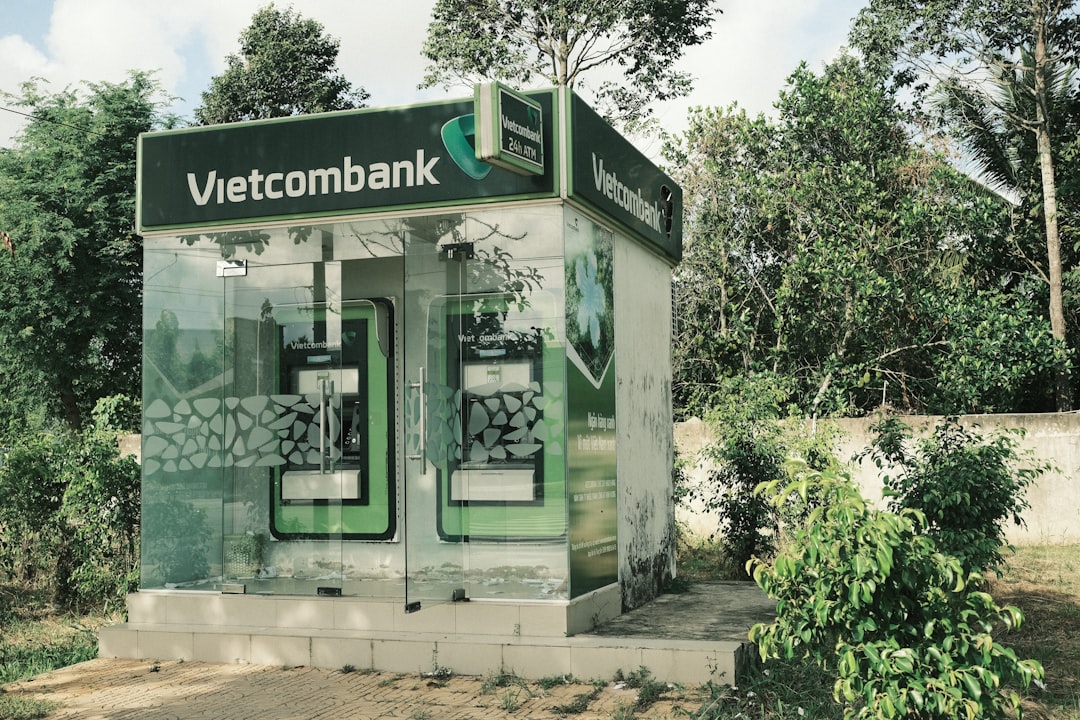
One of Vietcombank's clearest advantages is physical reach. Its ATM and branch network covers all 63 provinces and cities in Vietnam, making it one of the most accessible banks for customers who travel domestically for work or live outside major urban centres. If you are based in Hanoi or Ho Chi Minh City, you will rarely struggle to find a Vietcombank ATM nearby. For people in smaller provinces, this nationwide footprint genuinely matters in ways that a purely app-based bank cannot replicate.
Interbank ATM withdrawals using the Napas network are available, though fees may apply when using another bank's machine. It is worth confirming the current fee schedule on the bank's official website before making frequent withdrawals across networks.
International and Remittance Services
Given its history as a foreign trade bank, Vietcombank has deep roots in international payments and remittances. It maintains correspondent banking relationships with major global banks and handles inward remittances from overseas Vietnamese (Viet Kieu) communities in large volumes. If you regularly receive money from family abroad or run a small business dealing in foreign currencies, Vietcombank's foreign exchange and remittance infrastructure is among the most reliable in the country.
Exchange rates for foreign currency transactions are published daily on the bank's website and app. As with all banks, the buying and selling rates will differ from the mid-market rate, so it pays to compare before making large currency conversions. The SBV also publishes reference exchange rates that serve as a benchmark — you can monitor those through the State Bank of Vietnam's official portal.
Credit Cards and Lending Products
Vietcombank issues credit cards under both Visa and Mastercard, with tiers ranging from classic to platinum. Cardholders typically earn reward points on spending, which can be redeemed for gifts, air miles, or bill credits depending on the current program. Annual fees and interest rates on outstanding balances vary by card tier and the bank's current promotions, so checking the latest terms directly with the bank is always the right move.
Personal loans and home loans are also part of Vietcombank's retail product range. Its mortgage products have historically been popular among first-home buyers in Vietnam, partly because of the bank's scale and partly because of the trust associated with its state-linked status. Interest rates on loans are subject to the SBV's monetary policy direction and the bank's own credit assessment, so rates fluctuate over time.
For comparison on how a similarly positioned bank structures its card rewards and lending products, our review of BCA Bank in Indonesia offers a useful regional parallel — BCA carries a similar dominant-yet-reliable positioning in its home market.

Fees to Watch
Vietcombank's fee structure is broadly reasonable for a large traditional bank, but there are a few areas worth being aware of. Monthly account maintenance fees apply if your balance falls below a set threshold, though the exact amount depends on the account type. International wire transfer fees can add up if you send money abroad regularly, so comparing with specialist remittance services or other banks for outward transfers makes sense. SMS banking notification fees, while small individually, are worth factoring into your monthly cost if you rely on SMS alerts for every transaction.
Who Should Bank With Vietcombank?
Vietcombank makes the most sense for a few distinct types of customers. If you are a Vietnamese professional or business owner who values institutional stability and a wide physical network above cutting-edge app design, this bank delivers. It is also a natural choice for people who regularly deal with foreign currencies, receive overseas remittances, or need a bank that is universally recognised when dealing with government agencies or large corporations.
First-time account holders setting up their first bank account in Vietnam will also find Vietcombank a safe, well-understood starting point — the brand recognition alone eases a lot of administrative friction when dealing with employers, landlords, or utility companies that prefer a major bank's account details.
Where Vietcombank is less ideal is for tech-first users who want a snappy, modern banking app with built-in budgeting tools, instant card controls, and a fully digital onboarding experience. Private banks like MBBank and Techcombank have invested more aggressively in that direction and may feel more satisfying to use day-to-day if the mobile experience is your primary concern.
Final Thoughts
Vietcombank is not trying to be the flashiest bank in Vietnam — and it does not need to be. Its combination of national reach, foreign currency expertise, strong deposit infrastructure, and regulatory standing makes it a genuinely reliable home for your money. The digital experience is functional and improving, the ATM network is hard to beat, and the brand carries a weight of trust that matters in a market where institutional confidence still plays a significant role in banking decisions. For most Vietnamese customers who want a dependable primary bank, Vietcombank earns its place at the top of the shortlist.

Maria Santos
Financial analyst covering Southeast Asian banking markets.